Compliance guidelines for sending domestic and international SMS messages
New Regulations:
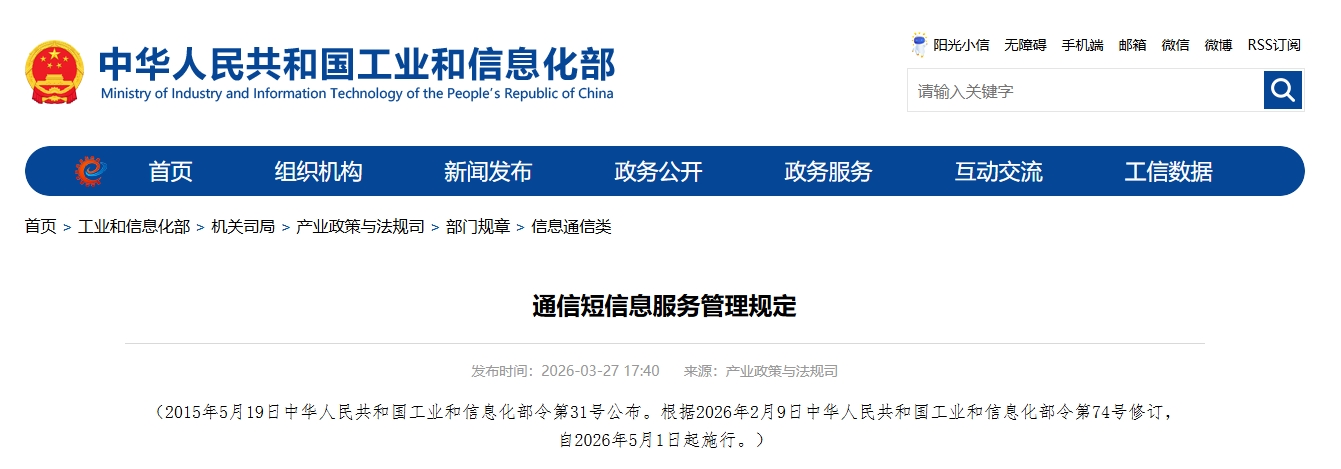
Recently, the Ministry of Industry and Information Technology (MIIT) issued the "Regulations on the Management of Short Message Services" (Order No. 74), which comprehensively revises the regulations to address issues such as nuisance SMS messages, unauthorized commercial SMS messages, non-standard port access, and fraud risks. The new regulations will officially take effect on May 1, 2026.
As a service provider deeply rooted in the international SMS field, Talk2all has compiled five key points and combined them with the regulatory requirements of major global markets to help companies better understand and adapt to domestic and international SMS compliance requirements.
1.SMS Category Management
● New domestic regulations:SMS messages be clearly categorized into three types: commercial SMS (such as promotional activities and new product recommendations), business/service SMS (such as verification codes and logistics notifications), and public service SMS (such as weather warnings and government announcements). Non-commercial SMS messages are prohibited from containing any advertising content.
● International regulatory benchmarks: Most countries/regions also differentiate between marketing and non-marketing SMS messages and impose different restrictions. For example, Malaysia explicitly prohibits marketing SMS messages from containing links, phone numbers, social media accounts, or other misleading content. The United States prohibits the promotion of certain financial products such as loans, debt relief, and credit repair.
2.User consent is a prerequisite
● New domestic regulations:Commercial text messages must obtain prior user consent and retain proof of consent. Other types of text messages can be sent normally.
● International regulatory benchmarks: In most countries, businesses can only send marketing text messages to customers who actively subscribe. For example, the EU's GDPR requires users to explicitly and voluntarily choose to subscribe to marketing text messages, rather than having them automatically selected or bundled with their consent.
3.The sender's identity must be real and transparent
● New domestic regulations:Bulk SMS messages must simultaneously transmit the sender's real identity information, using a method that can clearly and authentically identify the sender, such as the company's full name, abbreviation, or registered trademark.
● International regulatory benchmarks: Companies can use their brand name as the Sender ID, but this is not allowed in all countries. For example, South Korea only supports purely numeric sender IDs and does not support the display of English letters; markets such as Brazil, Indonesia, Mexico, the Philippines, and Singapore require pre-registration of a local Sender ID to prevent duplicate and fraudulent use.
4.Commercial SMS messages must provide a convenient unsubscribe option
● New domestic regulations:Sending commercial SMS messages must provide a convenient and effective method to refuse to receive them, and no obstacles may be created. Once a user unsubscribes, the message cannot be resent.
● International regulatory benchmarks: In the United States and some EU countries, every marketing SMS message must include clear and simple unsubscribe instructions (e.g., reply with "R" or "T"). A cumbersome unsubscribe process or a delayed response may be considered a violation.
5.Businesses Must Provide Anti-Harassment Services
● New domestic regulations:Basic telecommunications service operators and mobile virtual network operators (MVNOs) must provide users with anti-harassment services for SMS messages, establish complaint handling mechanisms, publish valid contact information, and respond to complaints promptly.
● International regulatory benchmarks: In many countries, users have the right to "Do Not Disturb." For example, in France and the United States, sending commercial SMS messages outside of working hours may result in complaints; the EU's GDPR requires companies to notify users and regulatory agencies within 72 hours of data breaches or other violations, or face hefty fines.

About Talk2all
As a leading global communications service provider, Talk2all leverages its self-developed intelligent 5G SMS international service platform, covering over 220 countries and regions with direct connections to hundreds of carriers. The platform offers bulk SMS services including marketing SMS, verification code SMS, and notification SMS, having sent over 5 billion SMS messages to date, making it the preferred platform for global enterprises conducting cross-border marketing and notification services.
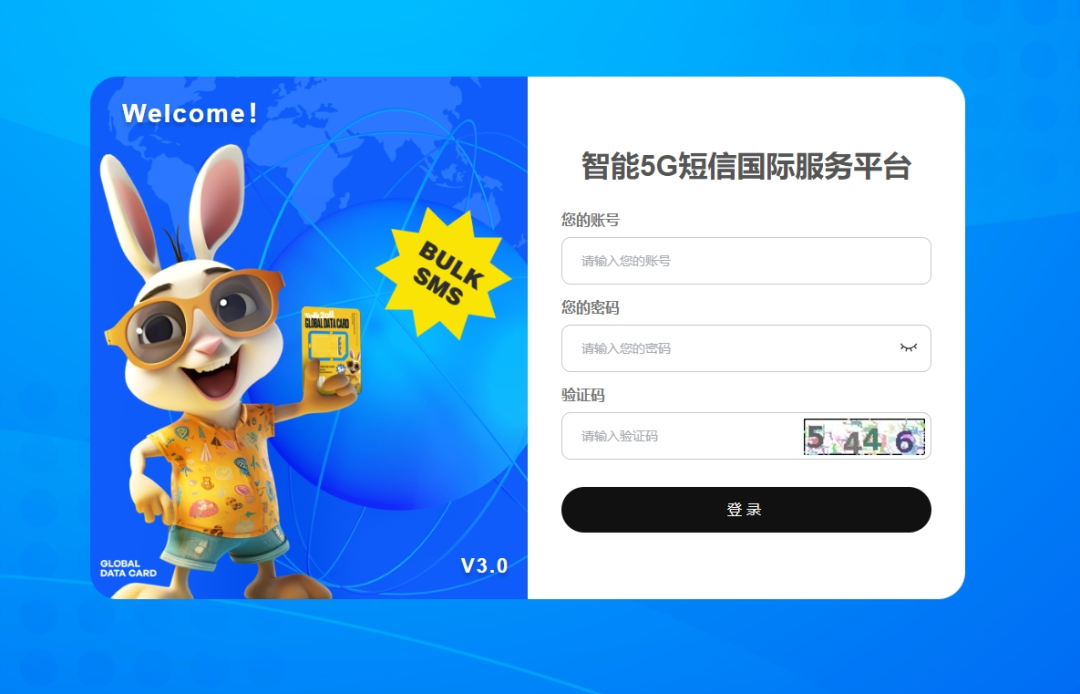
The Talk2all platform, with its enterprise-specific signature reporting, distributed clusters, AI intelligent routing, multi-node servers, and free testing services, has helped over 4,000 domestic and international enterprises achieve compliant SMS sending with high concurrency and high reach. In the future, Talk2all will continue to closely monitor policy developments and optimize platform capabilities to help enterprises connect with global users stably and efficiently while maintaining compliance.